
Solar and wind power generated more electricity in 2024 than all the world’s nuclear plants combined — for the first time in history. That sentence would have sounded like fiction a decade ago.
The numbers are no longer projections. They are receipts.
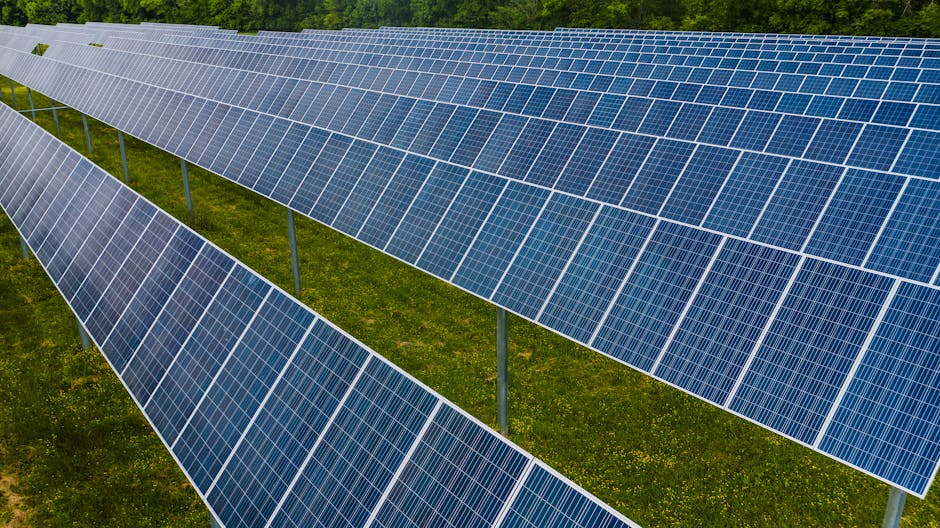
The Gigawatt Flood Nobody Saw Coming
Global solar photovoltaic capacity additions hit approximately 447 gigawatts in 2024, according to the International Energy Agency (IEA). To put that in scale: the entire installed solar capacity of the United States as of 2020 was roughly 76 gigawatts. The world is now adding more than five times that figure every single year. Wind power contributed an additional 117 gigawatts of new capacity in the same period. Together, these two sources accounted for over 95% of all new electricity generation capacity installed worldwide in 2024.
The mainstream narrative frames this as a clean energy success story. That framing is incomplete.
What is actually happening is a structural dismantling of the energy economy that took 150 years to build — and it is happening faster than the grid infrastructure designed to carry it.
China Is Not Playing the Same Game as Everyone Else
China installed more solar capacity in 2024 alone than the entire United States has ever installed in its history. That is not a typo. According to BloombergNEF data, China accounted for roughly 60% of global solar additions in 2024. Chinese manufacturers now produce solar panels at costs below $0.10 per watt — a price point that makes domestic production in Europe or North America economically indefensible without heavy subsidy.
The IEA projects that by 2026, solar PV alone could account for more than 20% of global electricity generation during peak daylight hours in major markets. Wind — both onshore and offshore — is expected to push past 2,500 gigawatts of cumulative global installed capacity by the same year, up from approximately 1,017 gigawatts at the end of 2022 (IRENA, 2023).
These are not green energy talking points. These are capacity curves physically reshaping dispatch order on power grids from Texas to Bavaria.

The Grid Was Not Built for This
Here is what the optimistic headlines consistently omit: generating renewable electricity and actually delivering it to consumers are two entirely different engineering problems.
Germany — often cited as a renewable energy leader — curtailed approximately 10.8 terawatt-hours of wind and solar power in 2023, according to the Federal Network Agency (Bundesnetzagentur). That is electricity that was generated, could not be absorbed by the grid, and was simply wasted. The curtailment figure has risen every year since 2018. More generation capacity without proportional investment in transmission infrastructure and storage does not produce a functional energy system. It produces a more expensive and more volatile one.
Texas experienced a similar paradox during multiple periods in 2023 and 2024: wholesale electricity prices went negative during high solar output hours, meaning generators were effectively paying the grid to take their electricity. Wind and solar operators in West Texas routinely face negative pricing events that erode the economic case for new investment — even as installed capacity keeps climbing.
The problem is not the panels or the turbines. The problem is that the energy transition is being driven by generation-side economics while grid-side investment lags by years, sometimes decades.
Storage: The Variable Nobody Wants to Price Honestly
Battery storage deployment is accelerating. Global grid-scale battery storage additions reached approximately 42 gigawatt-hours in 2023 (IEA, 2024 Electricity report). That sounds significant until you compare it to the scale of the problem: the United States alone would require an estimated 900 gigawatt-hours of storage to reliably back just 50% renewable penetration on its grid, according to modeling published by the National Renewable Energy Laboratory (NREL).
The gap between what exists and what is needed is not a rounding error. It is an order of magnitude.
Lithium-ion battery costs have fallen roughly 89% since 2010 (BloombergNEF, 2023) — a genuine and dramatic reduction. But raw material constraints on lithium, cobalt, and nickel create supply chain ceilings that cost curves alone cannot resolve. New chemistries — sodium-ion, iron-air, flow batteries — are entering commercial deployment, but none have yet demonstrated the cost-per-kilowatt-hour and cycle-life combination required to replace pumped hydro as the dominant long-duration storage technology.
Pumped hydro still accounts for over 90% of global grid storage capacity. It is a technology that requires specific geography. You cannot build it everywhere, and you cannot build it fast.

What 2026 Actually Looks Like
The IEA’s 2023 World Energy Outlook projects that renewable sources will account for approximately 35% of global electricity generation by 2025, rising toward 45% by 2030 under stated policy scenarios. Solar is expected to become the single largest source of electricity generation globally sometime between 2030 and 2033 — a timeline that was considered aggressive as recently as 2019.
By 2026, the energy map will look materially different from 2020 in three specific ways.
- Coal displacement will accelerate in Europe and the United States, where natural gas remains the primary balancing fuel — not a transition away from fossil fuels, but a substitution within them.
- Emerging markets will bifurcate. Countries with access to concessional climate finance (India, Vietnam, Brazil) will see rapid solar deployment. Countries without it (much of sub-Saharan Africa, parts of Southeast Asia) will continue building coal because the upfront capital for renewables remains out of reach.
- Energy geopolitics will shift from oil chokepoints to mineral supply chains. The Democratic Republic of Congo holds over 70% of global cobalt reserves. China controls approximately 60% of global rare earth processing capacity (U.S. Geological Survey, 2023). The new energy dependencies are different in geography. They are not smaller in risk.
The transition is real. The speed is real. The structural vulnerabilities underneath it are equally real — and they are being discussed far less loudly than the gigawatt headlines.
The Fossil Fuel Industry Is Not Retreating — It Is Repositioning
BP, Shell, and ExxonMobil each reported record or near-record profits in 2022 and 2023. BP quietly scaled back its renewable energy targets in early 2023, citing shareholder pressure for higher near-term returns. Shell reduced its offshore wind ambitions in the same period. The narrative of a fossil fuel industry in terminal decline is a story the industry itself is not living.
Global oil demand reached an all-time high in 2023, according to OPEC’s Annual Statistical Bulletin. Global coal consumption also hit a record that same year, driven by demand from China and India. These facts coexist with the renewable capacity records. They are not contradictions. They are the actual shape of an energy system growing in total size while its composition slowly shifts.
The energy transition is not replacing the old system. It is being layered on top of it.
Rover’s Take
The world is building renewable energy faster than at any point in human history, while simultaneously consuming more fossil fuels than at any point in human history — and calling it a transition.