
Solar and wind capacity additions hit a record 585 gigawatts in 2024, according to the International Energy Agency — more than the entire installed power capacity of the United States added in a single year.
That number sounds like a victory lap. It isn’t.
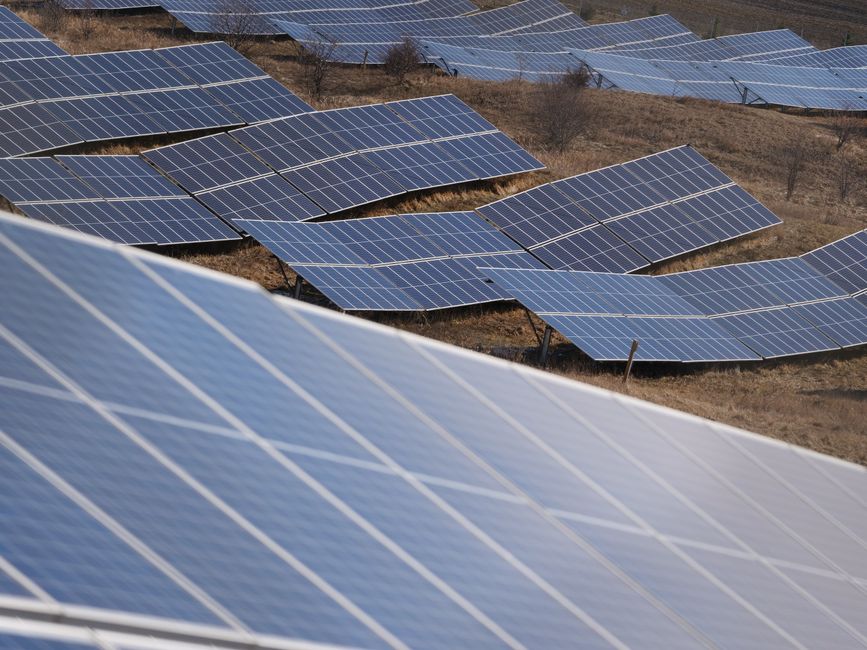
The Grid Doesn’t Care About Your Records
Every gigawatt of renewable capacity installed still has to answer the same question: what happens when the sun doesn’t shine and the wind doesn’t blow? In 2024, Germany — the country that spent two decades and over €500 billion building the most celebrated energy transition in the Western world — imported coal-fired electricity from Poland on seventeen separate occasions during low-wind winter weeks. The transition is real. The gaps are also real.
The IEA projects that renewables will account for 42% of global electricity generation by 2026, up from roughly 30% in 2022. That four-year jump is historically unprecedented. But electricity generation is not the same as total energy consumption. When you fold in industrial heat, shipping, aviation, and agriculture, renewables still cover less than 15% of global final energy demand. The headline number is the easy part of the story. The hard part is everything underneath it.
“The energy transition is not a single event. It is a slow replacement of one civilization’s infrastructure with another’s — and civilizations do not rebuild overnight.”
China Installed More Solar in 2023 Than the U.S. Has in Its Entire History
China added approximately 217 gigawatts of solar capacity in 2023 alone, according to China’s National Energy Administration. The cumulative solar capacity of the United States at the end of that same year stood at around 180 gigawatts. One country, one year, versus another country’s entire history of deployment. That is not a comparison most mainstream energy coverage is willing to sit with for very long, because it forces an uncomfortable question: is the West leading the energy transition, or merely narrating it?
The dominant media framing — that the Inflation Reduction Act and the European Green Deal are the twin engines of the global shift — obscures a simpler truth. Manufacturing capacity for solar panels, wind turbine components, and battery storage is overwhelmingly concentrated in China, which controls roughly 80% of global solar panel production as of 2024, per BloombergNEF. The transition runs on Chinese supply chains. Every other country’s clean energy ambition is, to a significant degree, a downstream function of that fact.

The Countries No One Is Talking About Are the Ones That Matter Most
Sub-Saharan Africa added less than 3 gigawatts of new renewable capacity in all of 2023 — a region of 1.2 billion people. Nigeria, the continent’s largest economy, still experiences an average of twelve hours of grid outages per day in its major cities, according to the World Bank’s 2023 energy access report. The global energy transition conversation is almost entirely a conversation about wealthy countries optimizing systems that already work. The billion people who have never had a reliable grid are largely absent from the narrative.
This is where the language of “transition” becomes its own kind of misdirection. A transition implies moving from one state to another. For a household in rural Chad or a small manufacturer in Lagos, there is no prior state of fossil fuel abundance to transition away from. There is only the question of whether clean energy can build the first reliable infrastructure they have ever had — faster and cheaper than diesel generators and coal plants did for the industrialized world. That race is the real story of the 2026 energy landscape. It is also the least-covered one.
The Storage Problem Is Not Being Solved Fast Enough
Global battery storage capacity reached approximately 45 gigawatt-hours at the end of 2023, according to Wood Mackenzie. To run a fully renewable global grid without backup fossil generation, analysts estimate the world needs somewhere between 8,000 and 12,000 gigawatt-hours of storage. The gap is not a rounding error. It is a structural chasm that no current deployment trajectory closes before 2040. Wind and solar are being built at speed. The infrastructure to hold what they generate is not keeping pace.
Grid operators in California, Texas, and the UK have all curtailed renewable output — effectively switching off functioning wind and solar installations — because there was nowhere to send the electricity. In California, curtailment of solar power exceeded 2.4 million megawatt-hours in 2023, according to the California Independent System Operator. Clean energy, generated and discarded. The system was not ready for what was built.
Fossil Fuel Investment Didn’t Stop — It Accelerated
Global investment in fossil fuel supply reached approximately $1 trillion in 2023, the highest level since 2015, according to the IEA’s World Energy Investment report. Simultaneously, clean energy investment also hit a record, crossing $1.7 trillion. Both numbers going up at the same time is the actual shape of the current moment. This is not a transition away from fossil fuels. It is an expansion of total energy infrastructure, with renewables growing faster on a percentage basis but fossil fuels still growing in absolute terms.
The world is not replacing the old system. It is building a second system on top of it.

What 2026 Actually Looks Like
By the end of 2026, the IEA projects renewables will surpass coal as the largest single source of electricity generation globally. That is a genuine milestone. It will also be announced against a backdrop of record global CO₂ emissions — because electricity is roughly 40% of the problem, and the other 60% is moving far more slowly. Steel, cement, shipping, and aviation collectively account for roughly 30% of global emissions, and meaningful decarbonization pathways for those sectors remain commercially unproven at scale as of 2025.
The political economy is also shifting in ways that complicate the optimistic trajectory. Tariff wars over Chinese solar panels — the EU imposed additional duties in 2024, and the U.S. maintained Section 201 tariffs — are slowing deployment in markets that need cheap panels to hit their targets. Energy nationalism is rising faster than energy cooperation. Countries are increasingly treating clean technology supply chains as strategic assets rather than shared infrastructure.
The transition is happening. It is also fragile, uneven, and slower than the headline numbers suggest. The gap between what is being built and what is being replaced is where the real story lives — and that gap is not closing on schedule.
Rover’s Take
The world is setting renewable energy records while simultaneously setting fossil fuel investment records — and calling it a transition.