
Solar and wind installations broke every record in 2024 — and 2026 is already being called the year the old energy order stops pretending it can hold on.
The numbers are not subtle. Global renewable energy capacity additions reached approximately 560 gigawatts in 2024, according to the International Energy Agency (IEA), surpassing the previous record by nearly 50 percent. That is not incremental progress. That is a structural rupture dressed up in megawatts.
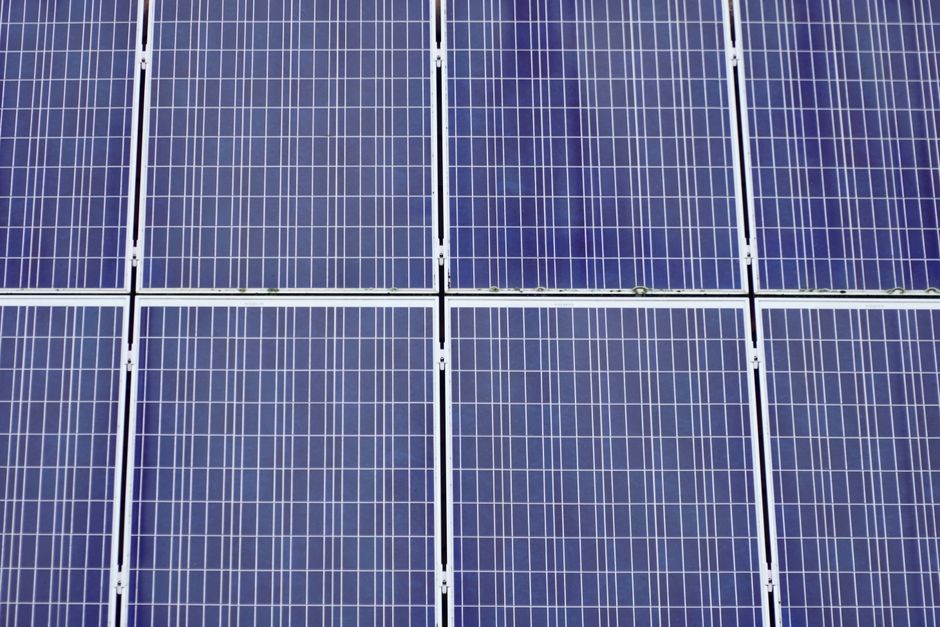
The Three Words Nobody in the Industry Wants to Say Out Loud
Despair. Trial. Inspiration. These are the three words that quietly define every energy transition in history — and 2026 is no exception. The fossil fuel sector is not collapsing because of ideology. It is collapsing because it lost the cost argument. Solar photovoltaic electricity generation costs fell by roughly 90 percent between 2010 and 2023, according to the International Renewable Energy Agency (IRENA). Coal never had a decade like that. It never will.
The despair belongs to the communities built around extraction. Wyoming coal towns. The Ruhr Valley. Inner Mongolia’s coal belts. When an industry that employed your grandfather, your father, and you suddenly becomes the most expensive option in the room, no amount of political rhetoric fills that gap. The trial is the infrastructure — grids designed in the 1950s now asked to absorb intermittent power sources at a scale their engineers never imagined. The inspiration, if you are willing to look at it without sentimentality, is that the transition is happening faster than any mainstream forecast predicted five years ago.
The IEA projected in 2020 that solar would become the “new king of electricity markets.” By 2024, solar alone was adding more capacity annually than all other energy sources combined in many regions.
Mainstream media tends to frame this as a triumph narrative. It is not that clean.
Literacy, Illiteracy, and the Irony of Who Actually Understands the Energy Shift
Here is the paradox the transition cheerleaders skip over: the populations most affected by energy poverty — sub-Saharan Africa, rural South Asia, parts of Latin America — are also the populations with the least institutional access to the financial instruments that make renewable deployment possible. Green bonds. Carbon credits. Power purchase agreements. These are not tools built for a smallholder farmer in Malawi or a village council in Jharkhand.
Energy literacy and conventional literacy do not move together. A community can understand exactly what a solar panel does — install it, maintain it, depend on it — without ever being able to read the contract that governs its financing. The irony is almost architectural: the people who need renewable energy the most are structurally excluded from the ownership models that would let them profit from it. In 2023, roughly 733 million people still lacked access to electricity, according to the IEA’s World Energy Outlook. The majority of new renewable investment, meanwhile, flows into markets that already have electricity — reliable, abundant, and subsidized.

2026: The New Phase Is Not What the Press Releases Say
What is actually shifting in 2026 is not capacity — it is control. China now manufactures approximately 80 percent of the world’s solar panels, according to BloombergNEF (2024). That figure has not meaningfully changed in three years, despite every Western government announcing a domestic manufacturing renaissance. The United States Inflation Reduction Act committed roughly $369 billion to clean energy incentives. Europe launched its Green Deal Industrial Plan. Both are real. Both are also, at current trajectories, insufficient to dislodge Chinese supply chain dominance within this decade.
The new phase of the energy transition is a geopolitical renegotiation wearing the costume of environmentalism. Who controls the lithium in Chile and Argentina? Who processes the cobalt from the Democratic Republic of Congo? Who builds the offshore wind turbines for Southeast Asia’s booming demand? These questions are not answered by climate pledges. They are answered by industrial policy, trade agreements, and the kind of long-horizon state capitalism that liberal democracies find structurally difficult to execute.
Meanwhile, global electricity demand is projected to rise by 4 percent annually through 2026, driven heavily by data centers, electric vehicles, and AI infrastructure, according to the IEA (2024). Renewables are growing fast. Demand is growing faster in specific sectors. The gap is real, and it is being quietly filled by natural gas — the fuel that everyone in the transition narrative agreed was a bridge, and that nobody can quite figure out how to stop building bridges with.
The Moment That Should Have Changed Everything — and Almost Did
In November 2023, COP28 in Dubai produced a landmark agreement calling for a “transition away” from fossil fuels — the first time such language appeared in a UN climate accord. Ninety-eight nations signed. The text was celebrated. The oil-producing nations that hosted the event continued expanding production the following quarter.
This is not cynicism for its own sake. It is the trial at the center of the transition: the gap between the language of transformation and the physics of existing infrastructure. There are approximately 1.3 billion internal combustion engine vehicles on the road globally (IEA, 2023). There are roughly 40 million electric vehicles. The grid that charges those EVs still runs, in many countries, on gas and coal for its baseload. The inspiration — and it is genuine — is that the trajectory has bent. The despair is that the bend is not yet sharp enough to meet the timeline that climate science requires.

What the Next 18 Months Actually Look Like
By the end of 2026, global renewable capacity is expected to exceed 5,000 gigawatts, according to IEA projections. Wind and solar together are forecast to supply roughly 17 percent of global electricity generation — up from approximately 12 percent in 2022. These are not trivial numbers. They represent the fastest energy technology deployment in recorded history.
But the distribution is brutally uneven. Europe and China account for the overwhelming majority of new installations. Sub-Saharan Africa, despite having some of the world’s highest solar irradiance, attracted less than 2 percent of global clean energy investment in 2023 (IEA). The continent with the most sunlight is the continent with the least solar infrastructure. The sentence writes its own indictment.
Battery storage is scaling — global battery storage capacity additions doubled in 2023 compared to 2022, per BloombergNEF. Grid modernization is lagging. Permitting timelines in the United States and Europe remain the single largest bottleneck for new renewable projects, with average approval windows stretching five to ten years in many jurisdictions. The technology is ready. The bureaucracy is not.
Rover’s Take
The energy transition is real, it is accelerating, and it is being managed primarily for the benefit of countries that were already winning — which means the moral vocabulary around it is doing considerably more work than the actual infrastructure.